
Venezuela’s Descent
From Bolivarian Dream to Global Menace

I. Introduction
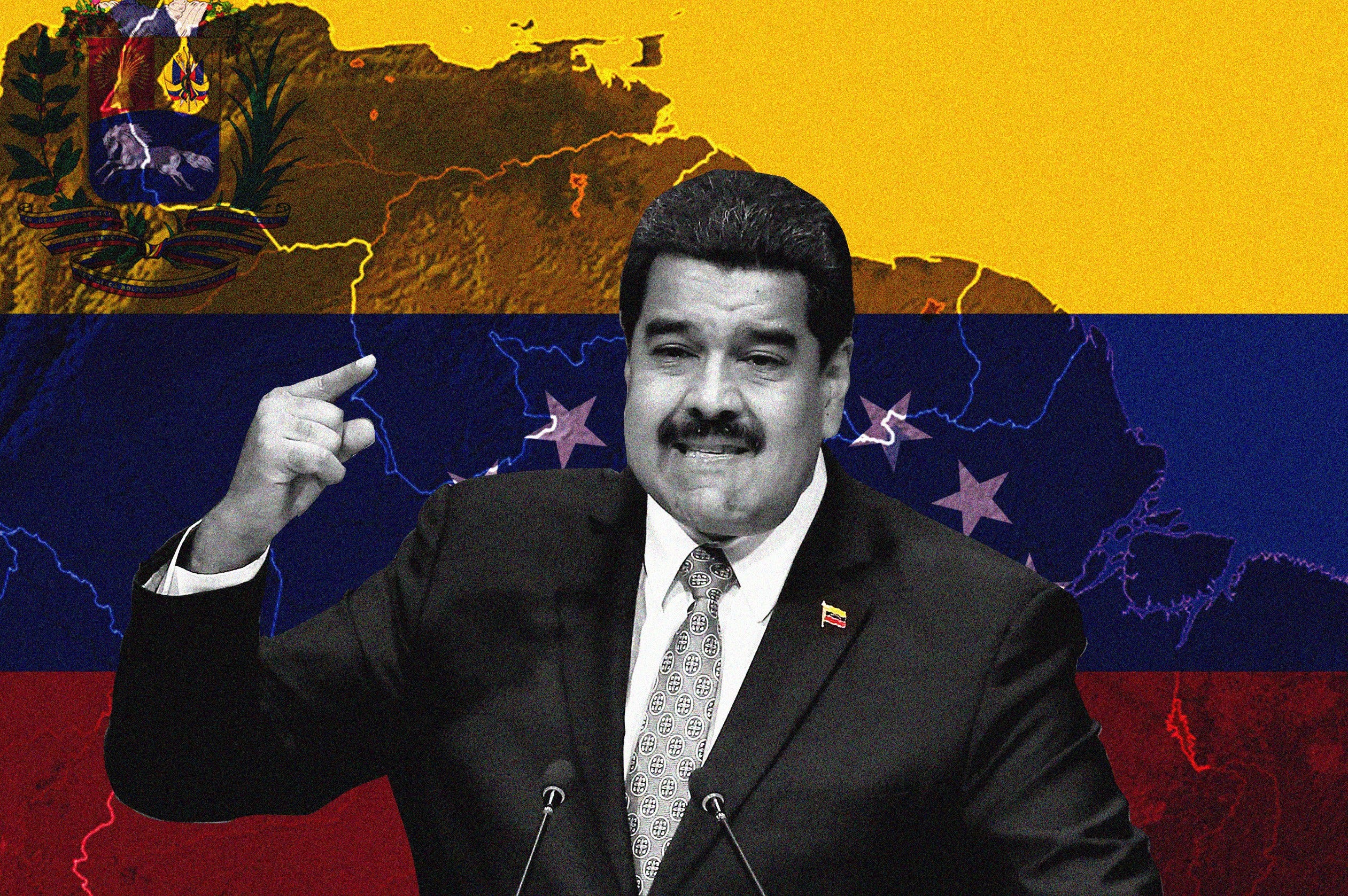
Once one of Latin America’s richest democracies, Venezuela has in recent decades undergone a dark transformation. Today, it is known less for oil wealth or Simon Bolivar’s independence legacy, and more as a hub of narco-trafficking, authoritarian repression, and even international terrorism.
How did a country with so much promise end up entangled with the likes of Iran’s Revolutionary Guard and Hezbollah, Russian arms dealers, Chinese surveillance firms, and global drug cartels?
The story involves socialist revolutionaries, cocaine kingpins, rigged elections (featuring very sketchy voting machines), and a network of unsavory alliances that span the globe.
In this report, we will explore Venezuela’s slide into extreme left wing authoritarianism under Hugo Chavez and Nicolas Maduro, detailing how the regime cemented its power at home while opening the door to criminal and terrorist elements. We’ll see how Venezuela evolved into a gangster state that literally runs on crime, facilitating cocaine smuggling and weapons trafficking hand in hand with foreign militant groups.
We’ll also examine Venezuela’s close partnerships with U.S. adversaries—including Iran, Russia, China, and even Qatar—and how these relationships bolster Maduro’s rule while threatening regional stability. Along the way, we’ll uncover the curious case of Smartmatic voting machines and Telecom Italia, an example of how Venezuelan leaders co-opted foreign businesses to mask their illicit operations and spread their influence.
Throughout, the focus will be on clear, factual explanations. If you’re new to the topic, fear not: this piece is written for an uninformed audience, aiming to demystify how Venezuela became a geopolitical threat and haven for terror in the Western Hemisphere. Let’s start with how it all began – the rise of Chávez and the death of Venezuelan democracy.
II. From Bolivarian Dream to Authoritarian Regime
Venezuela’s path to authoritarianism was paved by the very leaders who promised a revolution in the people’s name, as so often happens with collectivist revolutions. In 1999, Hugo Chavez came to power championing a “Bolivarian Revolution,” a socialist makeover meant to empower the poor and break the old elite’s grip.
Initially, Chavez was democratically elected and popular, but he soon set about dismantling the institutional checks that might one day limit his rule.
One of Chavez’s early targets was the judiciary. Despite a 1999 constitution that explicitly guaranteed judicial independence, by 2004, Chavez and his allies moved to pack the Supreme Court with loyalists (sound familiar?). They expanded the court from 20 to 32 justices and filled the new seats with Chavez’s supporters, blatantly tilting the balance in their favor.
A law passed that year even enabled removing judges by simple majority vote, letting the ruling party purge justices who didn’t toe the line. Human Rights Watch warned that this “political takeover of the Supreme Court” was a “severe blow” to judicial independence and Venezuela’s democracy.
In plainer terms: Chavez rewrote the rules to ensure the referees—the judges—would never rule against him.
Chavez also steadily eroded electoral integrity. He built a system of “competitive authoritarianism,” holding regular elections, but under conditions so unequal they were essentially fixed. Opposition media outlets were harassed or shut down.
For example, the independent RCTV television network was stripped of its license in 2007 after criticizing the government. Electoral authorities were stacked with regime cronies. When the opposition gained strength, Chavez simply changed the laws or the playing field.
He pushed through constitutional changes ending term limits, allowing him to potentially rule for life. Each vote became less about genuine choice and more about ratifying Chavez’s mandate under pressure.
After Chavez’s death in 2013, his hand picked successor Nicolas Maduro took the reins—and if anything, Maduro doubled down on authoritarian tactics. Facing discontent over a spiraling economy, Maduro jailed opposition leaders, violently crushed street protests, and even canceled elections when defeat seemed likely.
In 2017, when opposition candidates won control of Venezuela’s legislature (the National Assembly), Maduro’s regime didn’t accept it—instead, they convened a new rubber stamp body called the Constituent Assembly to usurp the Assembly’s powers.
That “election” for the Constituent Assembly was blatantly rigged; even the government’s long time voting machine supplier, Smartmatic, admitted the turnout numbers were inflated by at least a million votes. In short, by the late 2010s, Venezuela had ceased to function as a real democracy.
By then, all branches of government were either in Maduro’s pocket or made irrelevant.
Venezuela’s “extreme left” regime cloaked itself in socialist rhetoric—Chavez loved to quote Bolivar and preach equality—but in practice it became an old fashioned dictatorship. The socialist label mattered mostly as an anti-U.S. banner and a rationale for centralizing power.
What really defined Chavez and Maduro’s rule was power for power’s sake, and a willingness to use any means, lawful or criminal, to preserve it. As we’ll discuss, this all encompassing need to stay in control led the regime to some very unsavory alliances and activities.
When a government can no longer deliver prosperity or legitimacy, it often turns to repression and illicit dealings. Venezuela is a case study in exactly that.
III. A Gangster State: Narco-Trafficking, Smuggling and Terror
