
The Pager Wars
A Breakdown of the Mossad, Shin Bet, and IDF Intelligence's Pager Assassination Attack

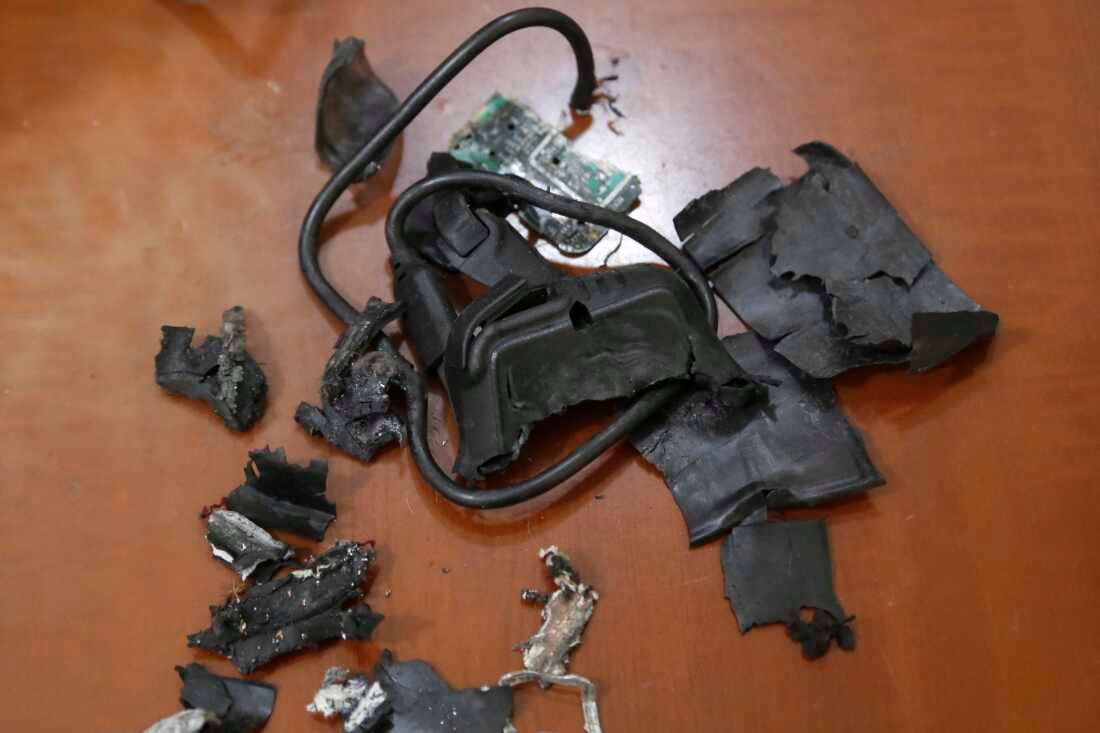
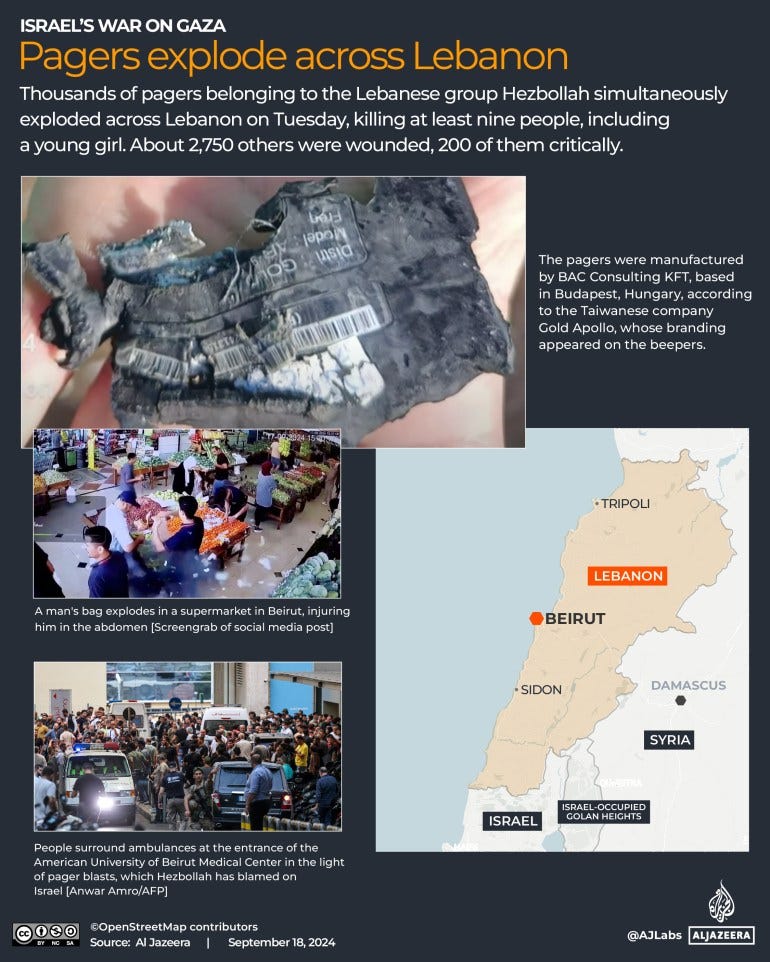
On September 17th and 18th of 2024, Israel’s Mossad, Shin Bet, and the IDF’s Unit 8200 launched one of the most prolific targeted personnel attacks in history, killing at least 42 Hamas and Hezbollah operatives and injuring over 3,500 more in under 48 hours. This breakdown will discuss the covert assassination operations that targeted the terrorist organizations, including the “Pager Bombings” and the “Walkie-Talkie Bombings” in Lebanon and Syria.
Background and Context
Israeli intelligence is no stranger to assassinations and has a long history of booby trapped electronic. From the phone bomb that killed Hamas bomb maker Yahya Ayyash in 1996, to a mobile phone poison attempt on Hamas leader Khaled Meshal in 1997, they have consistently shown the ability to not only think outside of the box, but how to reinvent the box entirely to fit their needs.
In February of 2024, Hezbollah’s then leader, Hassan Nasrallah, explicitly warned members that “their phones were more dangerous than Israeli spies,” urging Hezbollah fighters to break or get rid of their smartphones. Hezbollah then went low tech with pagers and walkie-talkies as their main forms of communication. They had no idea that Israeli intelligence had not only orchestrated this move but had actually prepared for multiple avenues of attack.
Going back to the summer of 2024, tensions between Israel and Iran-backed Hezbollah were running high as the Israel and Hamas war in Gaza continued, leading to almost daily cross-border skirmishes in southern Lebanon.
The same week of the attack, Israel’s Shin Bet internal security service revealed that it had foiled a Hezbollah plan to assassinate a former Israeli officer with a remotely detonated high explosive. This thwarted attack likely provided additional motivation for Israel’s dramatic counterstrike.
What unfolded on September 17th and 18th in 2024, to put it plainly, was nothing short of extraordinary.
Let’s dive in.
The Day the Beepers Bit Back: September 17th, 2024
It was 3:30 p.m. on September 17, 2024, and across Lebanon and parts of Syria, things were quiet…until they very much weren’t.
In the span of just a few chaotic minutes, Hezbollah operatives from Beirut to Damascus learned a very sharp lesson about trusting free tech: if Mossad gives you a gift, maybe don’t clip it to your belt.
Just kidding, Hezbollah had absolutely no idea that Israeli intelligence had infiltrated their entire communications supply network. This, in and of itself, was a stroke of genius that was rivaled only by its flawless execution and operational security.
The attack was both massive and happened over hundreds of miles as a wave of explosions rippled almost simultaneously through the hands, pockets, and faces of hundreds of Hezbollah members. The culprit? Not a drone. Not an airstrike. Not even a cyberattack. Nope, it was the pagers. Yes, actual pagers, as in relics from the '90s, but with a twist: these ones were loaded with just enough explosives to turn “You've got a message” into “You’ve got no face.”
Beep Beep Boom
These pagers weren’t your dad’s Motorola. They were distributed internally by Hezbollah as a secure, low-profile communication device. Good ol’ analog simplicity—no GPS, no app tracking, no Google spying. Just a trusty beep and a text message to keep the resistance coordinated and the Israelis guessing.
Except Israel wasn’t guessing. Israel was listening, planning, and apparently, booby-trapping.
Around 3:30 p.m., the pagers across Hezbollah’s network lit up with an “Important Message.” They beeped in a special sequence, no doubt triggering a Pavlovian twitch in whoever carried them. The screen required two buttons to be pressed at the same time to decrypt the message, which helpfully ensured you were holding the thing with both hands when it exploded.
If you’re wondering whether that’s darkly ingenious or outright sociopathic, the answer is a resounding yes.
Security footage later showed victims lifting the device to eye level or pressing the buttons before the pager detonated like a mini claymore, blasting shrapnel into the user's face and hands. Others didn’t even get the chance to look, as some of the devices exploded on their own, just to be sure no one got off easy.
Detonation, Detonation, Detonation
The effect was devastating. In Beirut’s Dahieh suburb, a known Hezbollah stronghold, chaos erupted as men crumpled mid-step, mid-conversation, or mid-coffee. Some never even touched the pager. A shopkeeper’s exploded in his pocket. Others went off on tables, in bags, or clipped to belts.
In towns and villages from southern Lebanon to the Beqaa Valley, and yes, even in Damascus, the detonation chain continued for nearly half an hour. It was like a symphony of Wile E. Coyote's death traps going off in surround sound. Eyewitnesses described a grim, surreal scene of grown men staggering around with bloodied faces, blown-out hands, or worse.
Among the more high-profile victims was Iran’s ambassador to Lebanon, who just happened to be in the blast radius of someone’s pager. He reportedly lost one eye and suffered severe damage to the other, proving once again that proximity to Hezbollah is not a great career choice for anyone in the “not-getting-blown-up” business.
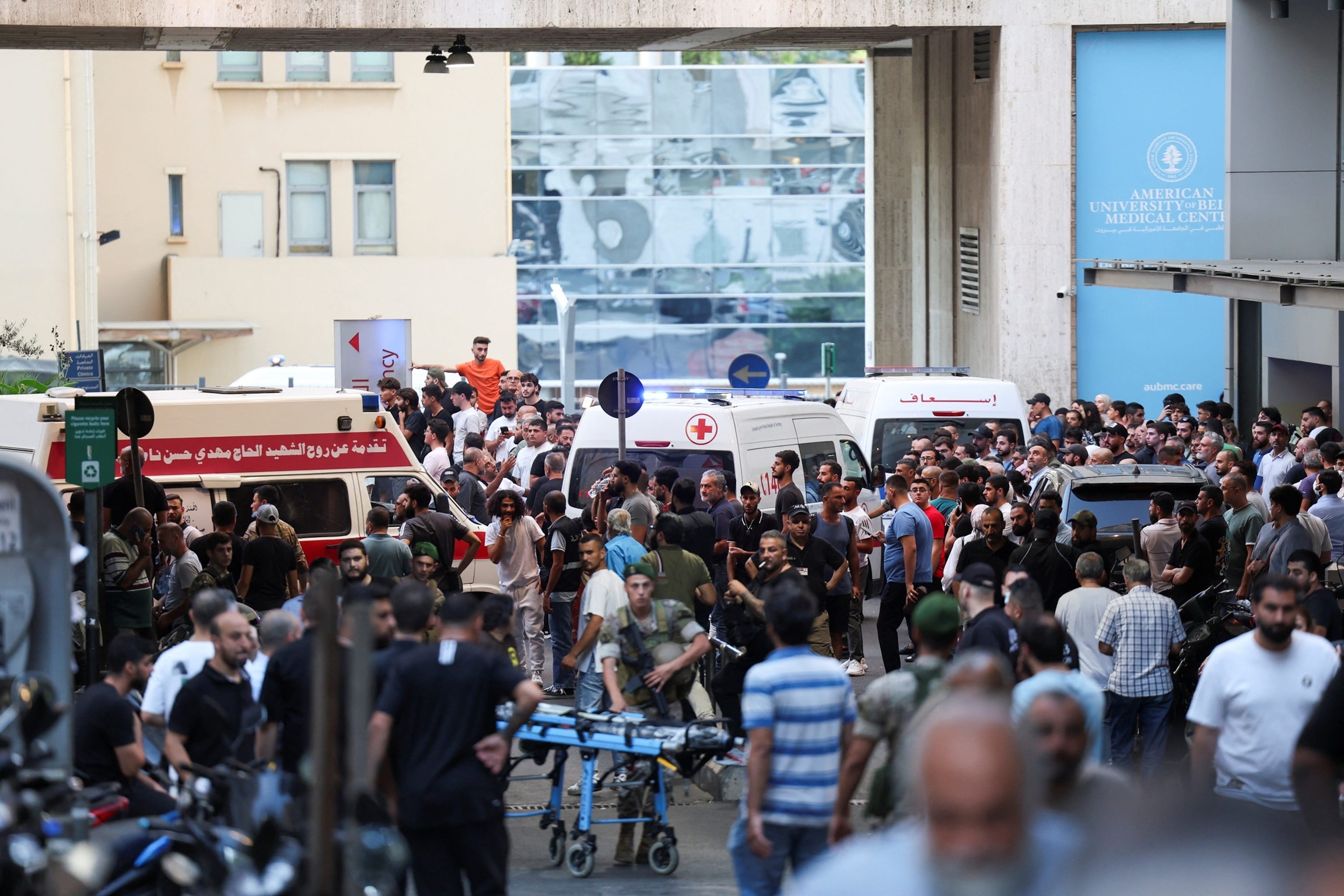
Within hours, hospitals across Lebanon were jammed. Emergency rooms overflowed with people missing fingers, hands, or pieces of their face. Over 150 medical centers received casualties. And here’s the kicker: most of the wounded weren’t in uniform. These weren’t frontline fighters. They were support staff, low-level recruits, and unlucky family members—the guy who does the ammo count, the cousin who refills the coffee, even the messenger who doesn’t necessarily know strategic details, but knows that he is working for Hezbollah.
Tactical Brilliance or Tech Horror Show?
So, what happened here?
This wasn’t just a bombing. This was a data-driven, cyber-physical, micro-targeted assassination campaign, designed with the precision of a watchmaker and the malice of a Bond villain. Mossad (with likely help from Shin Bet and IDF intelligence) pulled off something that redefines “remote detonation.”
They didn’t just kill operatives. They destroyed trust—the invisible glue that holds covert networks together. In a span of minutes, Hezbollah’s internal comms went from “secure and simple” to “a bomb in your pants.” Imagine the psychological fallout when no one dares answer a pager, pick up a phone, or check their messages ever again.
And of course, in a delicious twist of poetic irony, Israel turned Hezbollah’s own desire for old-school security against them. It’s like convincing your enemy to wear chainmail and then handing them a magnet.
Brilliant.
The Bottom Line
What happened on September 17 wasn’t just an attack, it was a masterclass in modern covert warfare. A surgical strike that didn’t rely on aircraft, drones, or commandos, but on information warfare and precision sabotage disguised as everyday tech.
It also serves as a sobering reminder: In the Middle East, even your pager might be out to get you.
Beep responsibly.
The Radios Rebel: Day Two of the Pager Purge
If Day One of the 2024 "Boom Boom Pagers" campaign was jaw-dropping, Day Two said: “Hold my funeral flowers.”
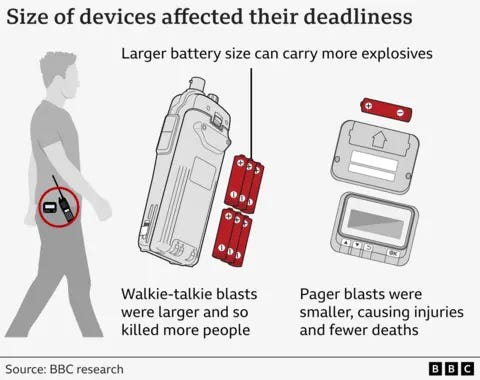
At approximately 5:00 p.m. on September 18, just 24 hours after the first wave of explosive pagers rewrote the manual on asymmetric warfare (and facial symmetry), a second wave hit, this time featuring walkie-talkies. That’s right. The humble two-way radio, the tool of comms nerds, team leads, and terrorist henchmen everywhere, had also been turned into a proximity-triggered shrapnel delivery system.
And where did this lovely encore kick off?
At a funeral for Hezbollah terrorists.
Funeral Pyres with Radios on Fire
Mourners had gathered in a Beirut suburb to bury the victims of the previous day’s pager blasts. Just picture it: somber music, black flags, quiet sobbing, and then, BOOM. Walkie-talkies carried by Hezbollah operatives began detonating mid-procession like demonic popcorn kernels.
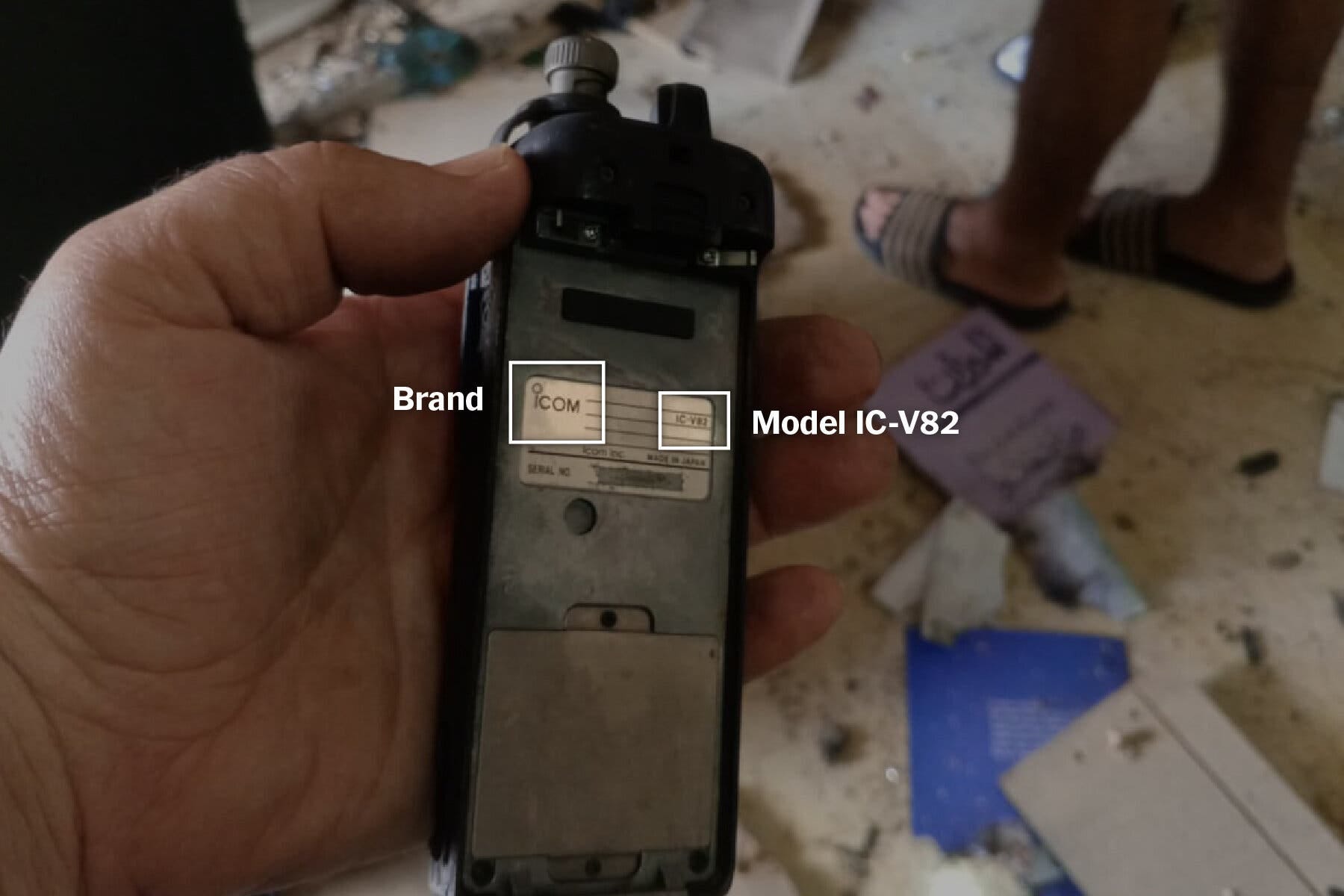
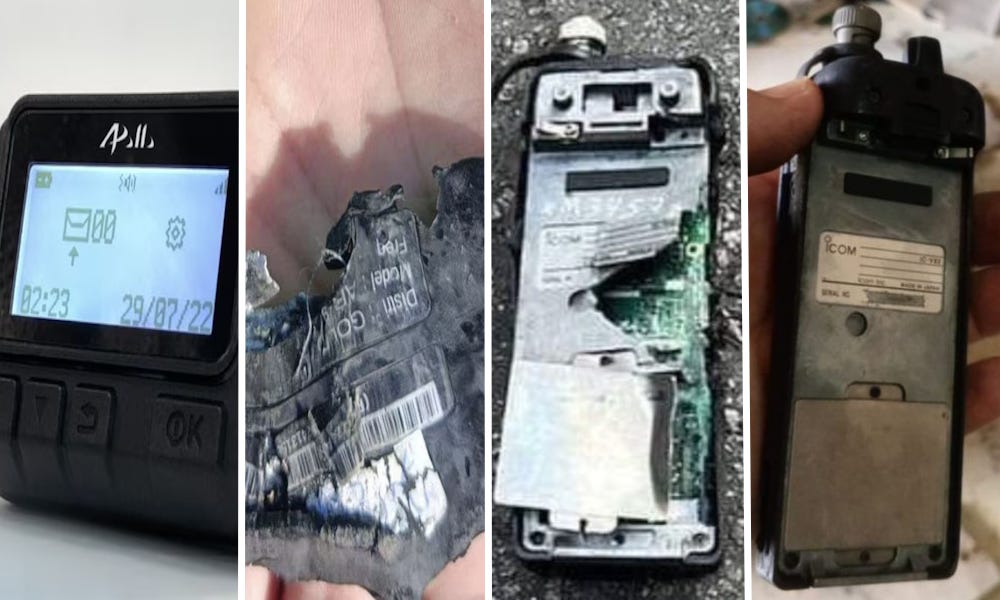
These weren’t dollar-store radios either. Hezbollah was rocking the Icom IC-V82 VHF two-way radio, the kind you'd normally trust on the battlefield, or to find out if the tea is ready in the ops room. Turns out, trusting comms equipment in Hezbollah these days is like playing Russian Roulette…but with a radio clipped to your hip instead of a revolver to your temple.
As one mourner put it: "One minute we were crying, the next minute we were flying."
More Blasts, More Fire, More Chaos
Reports of explosions poured in from Beirut, the Bekaa Valley, and southern Lebanon, many of the same communities still scrubbing blood off sidewalks from the previous day’s pager parade. Some of the radio blasts were so strong they ignited fires in nearby homes, vehicles, and stores—including, in one beautifully ironic twist, a battery shop.
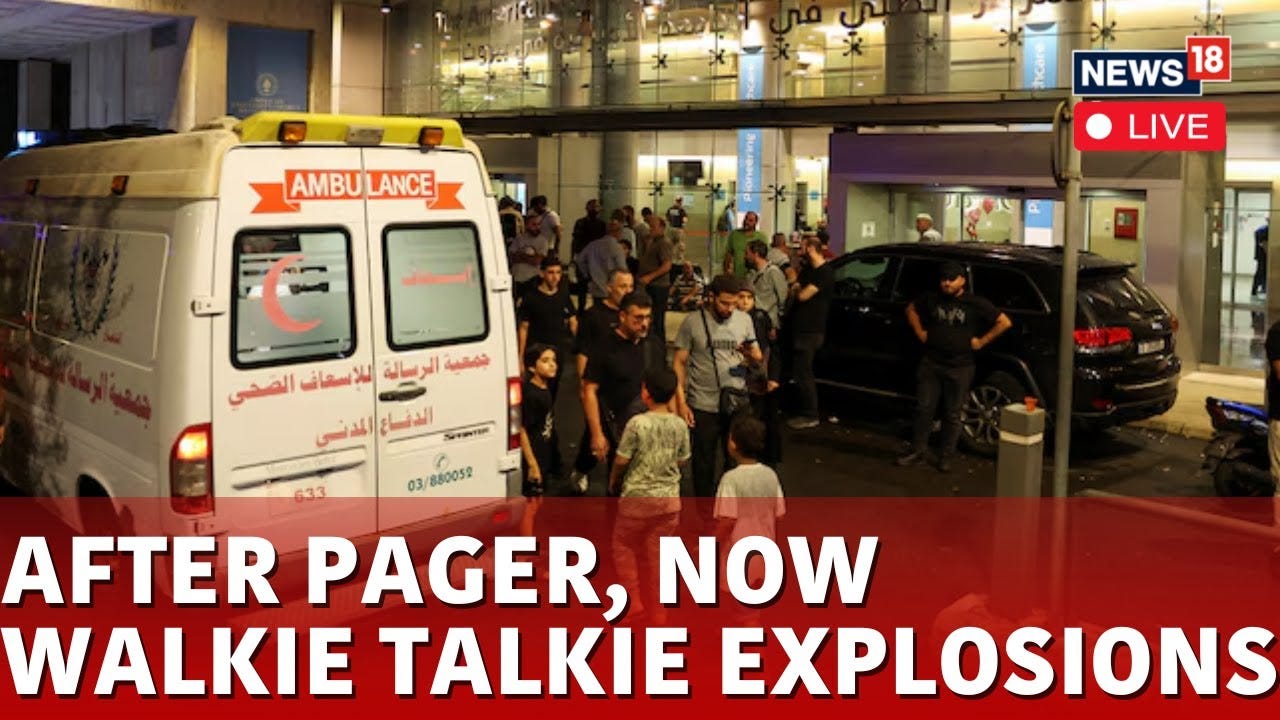
Lebanese civil defense scrambled to contain the infernos, battling blazes in 71 homes and businesses while radios popped off like cursed firecrackers. Ambulances began transporting fresh victims, and in one absolutely not reassuring moment, engineers discovered and defused an explosive radio inside an actual ambulance at a Beirut hospital, showing how deep Hezbollah infiltration goes in Lebanon.
You can’t make this stuff up.
Hospitals that were already bursting at the seams started resembling medieval field triage tents. Surgeons ran out of gloves, eyes, and patience. The Ministry of Health tapped out its official casualty reporting software and just started using spreadsheets.
Panic Mode: “Turn It Off, Smash It, Burn It”
The Lebanese Army issued emergency warnings: turn off or toss any suspicious electronics, especially anything that beeps or has an antenna. Airports banned pagers and radios from all luggage. In Hezbollah neighborhoods, panic was the new dress code. Fighters could be seen ripping batteries out of radios and throwing them in the street like cursed relics, or—in one case—straight-up setting them on fire.
By the end of it, Hezbollah’s internal communications strategy looked like a middle school science fair run by Gremlins.
If that is not a resounding mission accomplished, I don’t know what is.
Casualties, Carnage, and the Collapse of Trust
Let’s talk numbers.
From the pager bombs alone on Day One:
12 confirmed dead
2,700+ injured
Two Hezbollah fighters and at least two children were among the dead (Yes, terrorist organizations like Hamas and Hezbollah regularly use children to accomplish tasks so that they can distance themselves from danger)
And from Day Two’s radio rebellion:
30 more killed
Hundreds more injured
Total by September 20: 3,500+ injuries, with at least 42 people killed
Lebanon’s health minister declared it the worst mass-casualty event since the 2020 Beirut Port explosion, but based on the injury scale, it was way, way worse.
And it wasn’t just about body counts. The nature of the injuries read like the med school version of a horror novel:
Over 800 eye injuries
300 terrorists lost both eyes
500 lost one eye
Dozens of hand amputations, shattered jaws, mangled faces, and what one doctor described as "shrapnel embedded in skulls like buckshot in drywall."
Penetrating chest and abdominal wounds
Several victims were non-combatant family members, including the teenage son of a Hezbollah MP
Strategic Message: No One is Safe
By the evening of September 18, one thing was crystal clear: this wasn’t just a hit—it was a message. Not just to Hezbollah, but to every proxy group, ally, or arms dealer orbiting the Iranian axis. The message?
“We know what you use. We know where you are. And we’ll make your tech betray you when you least expect it.”
This campaign didn’t just target fighters. It shattered confidence, communication, and morale organization wide. A funeral became a battleground. A walkie-talkie became a landmine. And Hezbollah’s grip on operational control? Shattered like a pager in a pressure cooker.
Conclusion: When Your Gear Hates You Back
The September 17–18 incident wasn’t just an op. It was a psychological warhead wrapped in a plastic casing. In two days, Israel managed to sow fear, panic, and confusion with no troops deployed, no airstrikes launched, and no drones in the sky.
They let Hezbollah carry the bombs themselves—in their pockets, in their hands, and best of all, into funerals for their dead terrorist buddies.
If Day One was a brutal surprise, Day Two was the punchline of a very dark joke:
“What do you call a terrorist with a walkie-talkie?”
“Whatever you want—they won’t be able to hear you after it goes off.”
The Trojan Tech Trap: Planning Mossad’s Explosive Masterpiece
So, let’s get this straight: Hezbollah thought they were buying a batch of beefy, rugged pagers and radios. What they actually bought were time bombs with antennas—and the seller? None other than the Mossad, Israel’s covert kings of long cons, black coffee, and surgical vengeance.
This wasn't some opportunistic cyberattack. This was an intelligence operation years in the making, executed with the patience of a chess grandmaster and the explosiveness of a Michael Bay movie.
Let’s break down how Israel Trojan Horsed Hezbollah with a pocket full of doom.
Welcome to the Supply Chain from Hell
The first breadcrumb came with the discovery that the model of pager that exploded—the AR-924, made by Taiwan’s Gold Apollo Corp.—had never been officially sold in Lebanon. In fact, Gold Apollo had no idea their tech had become part of a global game of hot potato. The real seller? A mysterious Hungary-based company called BAC Consulting Kft.
Sounds legit, right?
Except that BAC Consulting turned out to be as real as a Tinder bio that says "6'4" and emotionally available." When journalists tracked down its Budapest "office," they found nothing more than a paper sign taped to a door. No staff. No phone line. No operations.
That’s because BAC wasn’t a company. It was Mossad in a mask. Along with at least two other dummy firms, BAC was set up solely to smuggle booby-trapped electronics into Hezbollah’s hands, with invoices, websites, and fake marketing to match.
The Hardware: Murder, Disguised as Durability
Each pager was rigged with about 3 grams of PETN, a military-grade explosive typically used to blow doors off of bunkers, now stuffed into a pager’s battery compartment. But wait, it gets better.
Israeli engineers also tucked in a hidden circuit board that could receive a remote activation signal. Not Bluetooth. Not Wi-Fi. Something custom, quiet, and undetectable to even Hezbollah’s counterintelligence teams, who actually did X-ray some of these devices and still saw nothing but "rugged communication reliability."
One Mossad officer described it like this:
“We injected a board inside the device that has explosive material and receives a code.”
Translation: You’re not even safe if you unplug it and keep it in a drawer.
To top it off, Mossad made the pagers slightly heavier due to the added kaboom parts. Concerned that this might feel suspicious, they countered by advertising the pager’s durability as "rugged, waterproof, and dustproof!" Because apparently, terrorists love a pager that can survive a monsoon.
Marketing the Apocalypse
And yes, there were marketing brochures.
Mossad, posing as electronics distributors, hired a real Gold Apollo sales rep that Hezbollah already knew to push the product. They created promo videos, fake spec sheets, and listed all the right military-grade buzzwords. The sales pitch even included a “limited-time free trial” offer on a batch of 5,000 pagers at zero cost.
Just imagine Hezbollah’s procurement team bragging about getting a killer deal, though they had no idea how true that statement actually was.
Those 5,000 pagers were delivered, distributed, and clipped to belts and vests across Lebanon by mid-2024. Hezbollah’s fighters didn’t know it, but they were now part of the most ironic suicide mission in history: walking around with Mossad-designed explosives in their pockets.
Act II: The Radio Rerun
But Mossad wasn’t done. No sir.
As early as 2014, they’d been cooking up a similar scheme with Icom IC-V82 radios—the walkie-talkie of choice for Hezbollah’s frontline fighters. When Icom discontinued that model, Mossad started producing identical fakes, complete with matching stickers and casings.
Over the next decade, they infiltrated the gray market with these death-trap radios, posing as arms dealers and routing shipments through third countries. Hezbollah, none the wiser, bought over 16,000 of these ticking time bombs, loading them into bunkers, vehicles, and vests for “secure field comms.”
As one Mossad veteran said:
“We create a pretend world…we’re the directors, producers, main actors, and the world is our stage.”
Oscar-worthy stuff, for real.
Patience, Deception, and the Trigger Moment
The genius of the operation wasn’t just the tech; it was the strategy. Mossad made sure the pricing was realistic—not too cheap to raise eyebrows, but sweet enough to beat competitors. They even turned away real buyers by jacking up prices, just in case some poor tech geek in Sweden accidentally ordered a self-decapitating pager.
By early September 2024, everything was in place. Thousands of radios and pagers had already been distributed. Hezbollah, in its excellent naivety, was fully armed…by Israel.
But Israeli intelligence caught wind that Hezbollah was getting nervous. Some commanders began asking questions about the new pager model. Others voiced concern about the security of their supply lines.
In short: the jig was almost up.
Use It or Lose It
Faced with losing their one-shot trap, Israel's war cabinet made the call: detonate the devices before Hezbollah could pull them out of operation.
So, in mid-September 2024, as Hezbollah ramped up cross-border attacks and peace talks sputtered, Mossad flipped the switch and turned Hezbollah’s tech into a handheld nightmare.
Two days of chaos, 40+ dead, 3,500+ injured, and a psychological scar that won’t heal with duct tape or propaganda.
Final Planning Analysis: 4D Chess With C4
This wasn’t just a sabotage op. It was a masterclass in modern warfare, where intel agencies don’t just kill targets—they write the script, cast the actors, and detonate the set when the time is right.
Hezbollah thought it was importing secure tools. Turns out, it was importing Israeli software updates…with explosive results.
And somewhere in Tel Aviv, a Mossad handler probably leaned back in his chair, took a sip of black coffee, and said:
“Next time, maybe they’ll read the fine print.”
Operation: Press to Detonate – The Execution Phase
In the world of covert operations, timing is everything. And on September 17, 2024, Israel didn’t just strike hard—it struck with military-grade choreography. This wasn’t a raid. This wasn’t a missile strike. It was a precision detonation event, pulled off across multiple countries with nothing but a wireless signal and a whole lot of planning.
At exactly 15:30, somewhere inside an Israeli intelligence hub, someone likely sipped their coffee, nodded to their handler, and pressed a button. What followed was a synchronized symphony of carnage. Pagers across Lebanon and Syria received a remote detonation signal and, almost as if on cue, detonated in the hands, pockets, and faces of Hezbollah operatives.
It was the kind of moment Mossad lives for: clean, clinical chaos, delivered from hundreds of miles away without a single boot on the ground.
The Button That Broke Hezbollah
Israel’s top brass had only just green-lit the operation days before. The final go-ahead came after high-level Israeli security meetings, and even then, the U.S. was left almost completely out of the loop. Defense Minister Yoav Gallant made a last-minute courtesy call to U.S. Defense Secretary Lloyd Austin minutes before showtime, offering a vague warning that “an operation” was about to unfold in Lebanon.
Translation: “Buckle up, but don’t ask questions.”
Once triggered, the coded wireless signal was picked up by hidden receiver boards buried deep inside the pagers. Within seconds, towns from Beirut to the Beqaa Valley erupted—not in fireballs, but in snap-crack detonations, perfectly timed to go off almost simultaneously. Hezbollah fighters, rank-and-file personnel, and unfortunate bystanders all experienced the same horrific moment: a familiar beep…an urgent message…then darkness.
And just like that, Hezbollah’s communications network became a mass casualty event.
Psychological Warfare: Fear by Design
But the beauty—or rather, the horror—of this operation wasn’t just the explosives. It was the psychological warfare baked into every element.
The message on the pager screen was designed to be irresistible: an “urgent communication” that required the user to press two buttons at once, all but guaranteeing the device would be held directly in front of the face, or with both hands. The PETN explosive, though only 2–3 grams, was precision-calibrated to maim, not kill.
Because in Mossad’s logic, a dead man is buried and forgotten…but a blind, handless Hezbollah fighter? That’s a living, breathing Public Service Announcement about what happens when you tangle with Israel.
Mossad had even tested these blasts on dummies, fine-tuning the yield to disable the victim while sparing those standing nearby. Strategic cruelty, in service of long-term messaging. And, judging by the results, it worked phenomenally, as there were thousands injured, hundreds permanently disabled, and a communications infrastructure left in tatters.
Day Two: And Again, Just to Twist the Knife…
After letting the panic simmer for 24 hours, Israel went back for seconds.
On September 18, during the funerals for pager victims, the second phase detonated—this time targeting rigged Icom radios, which Hezbollah had been using on the front lines and during funeral processions. The explosives inside those radios were triggered the same way: remote signal, wireless code, boom.
Some of the blasts occurred inside buildings. Others ignited vehicles, gas tanks, and even shops, turning small detonations into massive secondary fires. One blew up inside an ambulance. The total carnage? More lives lost, more people wounded, and the entire concept of “Hezbollah-issued equipment” thrown into disrepute.
Fallout: Panic, Paranoia, and the Death of Trust
By sundown on Day Two, Hezbollah had lost more than blood. They had lost trust in their own gear.
Orders went out to discard every pager and certain radio models immediately
Lebanese civilians started unplugging air conditioners and refusing to use electronics, terrified they’d explode too
Airports banned pagers and radios in luggage
The Lebanese Army began controlled demolitions of electronic devices found in Hezbollah strongholds
One Hezbollah member reportedly told a doctor:
“We don’t know what’s safe anymore. Even our phones feel like bombs.”
The Almost Encore: Turkey Spoils the Sequel
Just when it looked like Act III was coming, Turkish intelligence (MIT) intercepted a shipment of over 1,000 additional rigged pagers moving through Istanbul. Mossad was apparently preparing a follow-up operation, maybe to hit a different faction or just to finish the job.
But thanks to MIT, that shipment never made it to Lebanon. Turkey earned itself a quiet nod from Western agencies for defusing what could’ve been Round Three: Pagergeddon.
Legacy: A Black Eye and a Broken Backbone
By the end of the week, Hezbollah officials admitted what the world already knew:
This was the worst security breach in Hezbollah’s history.
Even veteran U.S. intelligence officers were stunned. One former official called it:
“A stunning demonstration of how deeply Israel can infiltrate and manipulate its adversaries.”
Not only did Mossad plant bombs in Hezbollah’s gear, but they also decided when and how the enemy would explode. The campaign struck with no warning, no airstrikes, no deniability, and no survivors in terms of organizational confidence.
This wasn’t a war. This was a Godfather-level hit. Hezbollah realized that the very tools it used to communicate had been wired by its enemy, and that the next beep could be their last.
Hezbollah Reacts: Rockets, Rumors, and Rattled Radios
If there’s one thing Hezbollah hates more than Israel, it’s being humiliated by Israel for the entire world to see—and that’s exactly what happened. When your fighters are getting disfigured by their own beepers and radios, it doesn’t just hurt your operational capacity, it guts your street cred.
The leadership’s first response was as predictable as it was desperate: blame Israel and fire rockets.
Within days of the blasts, Hezbollah tried to claw back some respect by unleashing barrages of missiles into northern Israel, with over 140 rockets in one day. It was less a strategic counterstrike and more of a rage-induced fireworks show, aimed more at morale than military targets.
Israel wasn’t laughing. The IDF immediately went on high alert, beefing up forces along the northern border. Chief of Staff Herzi Halevi called an emergency huddle with senior generals to start planning “offensive options.” Translation: If Hezbollah wants a war, we’re game, but we get home field advantage.
Meanwhile, the United Nations had a diplomatic meltdown. Secretary-General António Guterres condemned the pager bombings without naming names (classic UN move), urged “maximum restraint,” and basically begged everyone not to start World War III over a pile of exploded pagers.
More interestingly, Guterres openly speculated that the entire operation might’ve been a prelude to war, meaning a deliberate attempt to cripple Hezbollah’s communications and morale before a wider Israeli offensive. His concern wasn’t just hypothetical. Days later, Defense Minister Yoav Gallant publicly declared that Israel’s “center of gravity is shifting northward” and started redeploying troops and assets toward the Lebanon front.
Silence, Hints, and One Very Smug Prime Minister
For a brief window, Israel held its usual posture of strategic ambiguity—not denying responsibility, but also not explicitly taking credit. Until Prime Minister Benjamin Netanyahu couldn’t help himself.
Asked about the explosions, he smirked and said:
“If Hezbollah has not understood the message, I promise you it will understand it.”
Translation: We did it. And we’ll do it again. Try us.
By November, the mask was fully off. Netanyahu not only admitted Israel’s role—he bragged about it in front of reporters. He even tossed shade at his (now ex-) defense minister, accusing him of trying to block the plan in its early stages.
Israeli media, for their part, had a field day. Headlines called the operation “audacious,” “brilliant,” and “straight out of a spy thriller.” One former FBI analyst summed it up like this:
“The message to Hezbollah was clear: We can reach you anytime, anywhere—and do it with the press of a button.”
Nasrallah's New Normal: Bunker Paranoia and Tech Trauma
Back in Lebanon, Hezbollah’s then Secretary-General Hassan Nasrallah addressed his followers two days after the attack. But instead of his usual fiery sermon, he sounded…well, shaken. Israeli sources gleefully claimed that Nasrallah had actually seen some of the pager blasts with his own eyes, deep inside his bunker—a rumor Mossad described as “very strong” with just enough plausible deniability to make it terrifying.
Whether true or not, the effect was clear: Hezbollah fell into a full-blown panic.
The group ceased using pagers and radios altogether, yanked power cords from everything, and began treating every piece of equipment like a potential Mossad surprise party. One analyst noted that Hezbollah’s rank-and-file were now gripped by fear, not of missiles, but of electronics.
“It’s psychological warfare,” a Lebanese commentator said.
“When your walkie-talkie might take your eyes, you stop volunteering for logistics duty.”
CNN analysts agreed: this wasn’t just a tactical hit, it was a deterrence campaign disguised as tech sabotage, meant to erode morale, stall recruitment, and undermine faith in leadership. And guess what, it worked.
An unnamed Hezbollah official later admitted that over 1,500 fighters and personnel were “taken out of action,” meaning wounded, blinded, or otherwise incapacitated. Many required long-term care in hospitals across Beirut and even Tehran.

Moral Gray Zones and Strategic Tradeoffs
Israeli officials, of course, disagreed with critics of the attacks entirely.
Their defense was straightforward. Hezbollah is a hybrid organization: military, political, and social. Its members don’t wear uniforms. Its charities, clinics, and logistics teams are all part of its war machine. Therefore, anyone carrying a Hezbollah-issued device is part of that system.
One Washington Post op-ed doubled down, suggesting that every person harmed was linked to Hezbollah in some capacity. Needless to say, that framing drew sharp rebukes, especially from Lebanese civilians who had just watched family members disappear into hospital ERs or body bags.
And even inside Israel, strategic doubts emerged.
Veteran intelligence journalist Yossi Melman warned that the operation, while clever, hadn’t degraded Hezbollah’s core military threat. Its rocket arsenal, top commanders, and combat battalions were untouched. Worse, he said, it might galvanize Hezbollah to retaliate more aggressively, pushing the region closer to war.
Because, let’s be honest, blowing up some logistics guys and charity staff is a humiliating blow…but it doesn’t disarm the thousands of rockets still pointed at Tel Aviv.
Yossi, in his risk aversion, was missing the entire point of the operation.
Tactical Genius or Strategic Gamble?
The New York Times summed it up best:
“A tactical success without a clear strategic goal.”
Sure, Israel proved it could booby-trap the very arteries of Hezbollah’s infrastructure. But what now? There was no obvious follow-up plan, no secondary offensive, and no kill shot.
Former IDF intelligence chief Amos Yadlin, however, saw things differently. He argued the point wasn’t to destroy Hezbollah—it was to shock them into reconsidering further escalation. In his view, the pager bombings were a one-time message:
“If you keep pushing, the next surprise might be bigger. Or louder. Or both.”
And maybe, just maybe, that message will be enough.
Conclusion: Shock and Awe, Rewired
In the annals of modern covert warfare, the September 2024 Hezbollah Pager Bombings will go down as one of the most audacious, precisely executed, and psychologically devastating operations in Israeli intelligence history.
This was not a drone strike. Not an air raid. Not boots on the ground.
This was an ambush embedded in circuit boards, detonated remotely with nothing but a signal and a sinister amount of foresight.

This operation represents a new frontier in warfare—one where supply chains are battlegrounds, devices are weapons, and psychology is the main theater of operations.
It was not a conventional victory. It didn’t topple Hezbollah. But it unplugged their confidence, severed their communications, and shook their leadership to its core.
Whether it was a brilliant success or a dangerous overreach remains debated. But one thing is certain:
In September 2024, Israel showed the world that it doesn’t just fight on the battlefield—it builds the battlefield, wires it for demolition, and waits for the perfect moment to push the button.
In reality, the most profound damage wasn’t physical; it was psychological.
Hezbollah’s fighters were suddenly afraid of their own gear. Logistics clerks were blinded. Communications networks collapsed. Rumors swirled that even Nasrallah himself had seen the blasts from his bunker. And the image of Mossad as an all-seeing, all-reaching specter grew stronger — the kind of terror no missile can deliver.
As one intelligence officer put it:
“A dead fighter is one thing. A maimed fighter, staring at his own missing hands, is a message.”
The sheer competence, operational security, and intelligence required to not only formulate this plan but to execute it flawlessly will be studied by the Intelligence Community across the globe for years and years to come.
Israel doesn’t mind fighting terrorists with terror.
Question everything.
DOL
Whether you are for Isreal or against them, this just proves that the Mossad is by far and away the greatest and most feared intelligence agency in the world.
They infiltrate governments…even ours, and dont have to get through all the red tape that we do, to accomplish thier missions. Assassinations of leaders and enemies worldwide aint no thang to them…
Nukes, but same vibe: ““...victories not of resources but of strategic doctrine: the ability to break the framework which had come to be taken for granted and to make the victory all the more complete by confronting the antagonist with contingencies which he had never considered." (Nuclear Weapons and Foreign Policy" Henry A. Kissinger)