
Operation Epic Fury
An Analytical Breakdown

I. Introduction
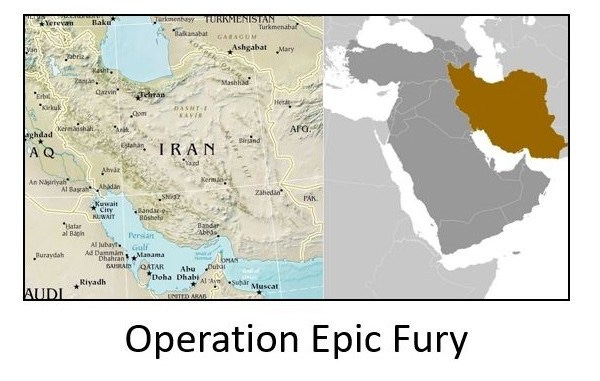
February 2026 will be remembered as the month when two long time rivals decided to take the gloves off. While many people were thinking about the Oscars, the Olympics that just finished, or binge watching the latest streaming sensation, policymakers in Washington and Jerusalem were preparing something that felt more like a streaming thriller.
In the early hours of February 28, the United States and Israel launched a joint military campaign against Iran that they dubbed Operation Epic Fury. Within hours, social media feeds were filled with videos of bright streaks over Tehran and speculation about what this meant for the wider Middle East.
The operation combined classic military doctrine with modern technology, leaving analysts to parse everything from strategic intent to the number of drones in the air.
This article aims to explain what happened, why it happened and what it might mean for the future. It draws on open source intelligence (OSINT), official doctrine, and credible news reporting and combines all of that information together into a strategic level analysis of the operation.
II. Background: From Protests to Buildup
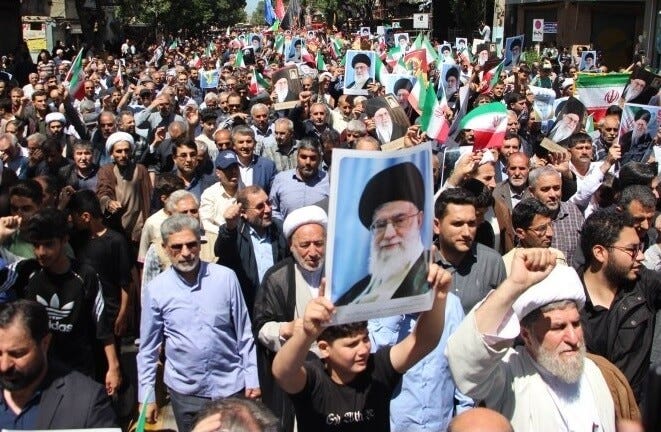
The strikes of February 28 did not emerge from nowhere. Iran entered 2026 under severe domestic and international pressure. Nationwide protests erupted in late December 2025 over economic collapse and government repression while human rights organizations estimated tens of thousands of Iranian citizens being killed by IRGC and similar forces.
Anti government demonstrations spread to more than 100 cities and were met with lethal force.
At the same time, diplomatic efforts to revive nuclear talks collapsed. President Donald Trump, who returned to the White House in 2025, publicly declared that Iran’s nuclear and ballistic missile programs posed a threat to U.S. national security (notice I said both nuclear and ballistic missile programs, as they are not one and the same). He said the United States would not allow Tehran to develop a nuclear weapon and warned that military action was on the table.
Israel faced its own reasons to act. Iranian backed militias in Lebanon, Syria and Yemen continued to threaten Israeli territory despite being weakened by Israeli operations since 2023. The June 2025 Israel and Iran war, a short but intense conflict, saw Israel destroy a large portion of Iran’s ballistic missile stockpile, but Iran quickly replenished it.
Israeli officials argued that waiting for Iran to fully rearm would be dangerous. As one Israeli general put it, waiting would be like letting the villain in a superhero film collect all the Infinity Stones before doing anything about it. By late January 2026, the United States had built up its largest military presence in the Middle East since the 2003 invasion of Iraq.
Warships, bomber task forces and carrier strike groups converged on the region.
The final diplomatic effort collapsed in mid‑February. Oman tried to mediate between Washington and Tehran, but negotiations stalled. Meanwhile, Iranian officials signaled a shift in doctrine: the Defense Council issued a statement on January 6 saying Iran would act on “objective signs of threat”. For decades Iran had promised retaliation but avoided initiating wars. The new formulation hinted at pre‑emptive defense and suggested Iranian leaders felt cornered.
III. Launching Operation Epic Fury
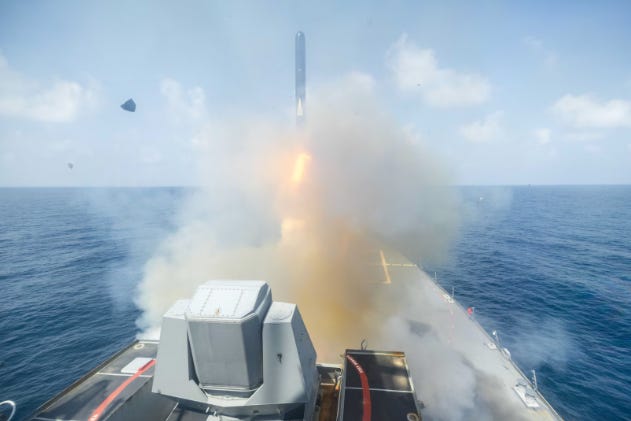
At 06:00 local time on February 28, a coalition of American and Israeli forces began bombing targets across Iran. The United States called the mission Operation Epic Fury, while Israeli planners reportedly used the code name Roaring Lion.
President Trump announced the operation in a video statement and called on the Iranian people to rise up against their regime. The stated objectives were ambitious: destroy Iran’s missile and nuclear capabilities, neutralize the Axis of Resistance (Iran’s network of regional proxies) and remove the Iranian leadership.
Israel framed the campaign in similar terms, describing the goal as removing existential threats posed by Iran’s nuclear and missile programs and curbing proxy attacks.
The scale of the initial strikes was simply unprecedented and will be studied in global military curriculum for decades to come.
